

Key Takeaways
- Understanding employees’ diverse needs is crucial for effective retirement planning.
- Employers are increasingly committed to providing inclusive retirement benefits.
- Innovative plan designs can enhance employee participation and savings rates.
Table of Contents
- Understanding Diverse Workforce Needs
- Employer Commitment to Inclusive Retirement Benefits
- Innovative Plan Designs for Enhanced Participation
- Addressing Challenges of Nontraditional Workers
- Generational Differences in Retirement Plan Readiness
- Strategies for Implementing Inclusive Retirement Plans
- Conclusion
In an era where workforces are becoming more varied by age, background, and work arrangements, retirement plan design demands a fresh approach. Companies face increased pressure to make retirement plans accessible and relevant for everyone on their payroll. Incorporating tailored features into retirement benefits, such as retirement planning services, helps employees pursue financial security regardless of role or background. In this environment, inclusivity is just as critical as plan effectiveness.
Leading organizations are reimagining their benefits to meet the changing needs of modern workers. Recognizing the importance of individualized support, they are adopting strategies that reflect workforce diversity and anticipate the challenges unique to nontraditional employment types. Building equitable retirement plans not only fulfills a social and moral responsibility but also improves employee satisfaction and retention by meeting the financial expectations of all team members.
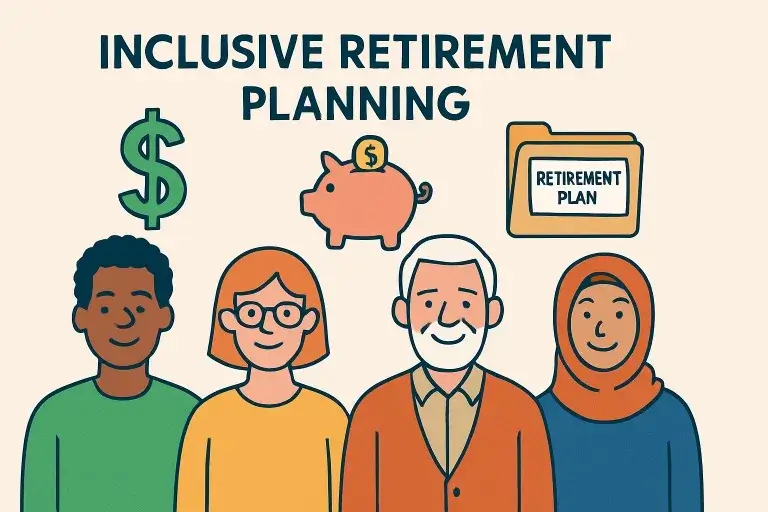
Diverse retirement needs stem not only from varying income levels and job structures but also from differences in financial literacy, age, and cultural expectations. Employers committed to inclusion are seeking flexible solutions that reduce participation barriers, even for part-time and freelance staff. With a more inclusive approach, organizations can empower all employees, whether just starting their careers or nearing retirement, to plan more confidently for their futures.
By understanding these shifting dynamics and prioritizing innovation, organizations can build retirement programs that deliver on both financial wellness and workforce inclusion. Taking the time to reassess retirement offerings in light of these evolving needs ensures that no employee is left behind in planning for life after full-time work.
Understanding Diverse Workforce Needs
Modern businesses employ people from a wide range of demographics, including different age groups, cultural backgrounds, and work arrangements (such as gig, part-time, or remote employment). Each group brings unique perspectives and retirement planning requirements. For instance, younger employees often prioritize flexibility and digital access, while older employees may be more focused on long-term stability and catch-up contributions. Recognizing these distinctions enables employers to create plans that every worker can relate to and value.
Employer Commitment to Inclusive Retirement Benefits
Proactive organizations demonstrate their commitment to employee well-being by continually improving their retirement offerings. Surveys show that a majority of employers feel strongly obligated to ensure their staff’s financial health through robust retirement benefits. Enhanced retirement programs often go hand in hand with various financial wellness initiatives, signaling to employees that their future security is a top priority. This sense of organizational responsibility has been a driving force behind expanded benefit options and better plan accessibility.
Innovative Plan Designs for Enhanced Participation
One of the most significant advancements in retirement planning is the widespread adoption of automatic features that simplify saving. Automatic enrollment places eligible employees into retirement plans by default, removing the barrier of inaction that often prevents participation. As often highlighted in resources like wheon com finance tips, starting early and automating contributions can dramatically improve long-term financial outcomes. When paired with higher default contribution rates, these features meaningfully boost retirement savings. Many 401(k) plans now set deferral rates at 4 percent or higher, encouraging workers to contribute at a more impactful level from the beginning. Some plans also include automatic escalation, with contributions gradually increasing each year. Together, these strategies promote consistent saving habits, broaden participation across income levels, and help employees build meaningful retirement assets regardless of financial literacy or prior investing experience.
Addressing Challenges of Nontraditional Workers
The rapid expansion of gig work, freelance opportunities, and contract-based roles has transformed today’s labor market, leaving many workers without access to traditional employer-sponsored retirement plans such as 401(k)s. As a result, financial security in later years has become increasingly uncertain for millions of people. To bridge this gap, portable retirement plans (PRPs) and state-sponsored individual retirement account (IRA) programs are gaining traction nationwide. These flexible solutions allow workers to contribute consistently, even as they change jobs, manage multiple part-time positions, or pursue independent careers. By making retirement savings accessible regardless of employment status, these initiatives help close the retirement-readiness gap, promote financial stability, and foster lifelong saving habits that strengthen individuals’ long-term economic resilience.
Generational Differences in Retirement Plan Readiness
Employers must also navigate apparent generational differences in retirement preparedness and expectations. Millennials and Gen Z workers tend to prioritize financial wellness benefits, viewing retirement plans as essential rather than optional perks. As digital natives, they expect seamless online platforms, mobile access, transparent fee structures, and personalized projections that help them visualize long-term outcomes. In contrast, Gen X and baby boomer employees may demonstrate lower participation rates, sometimes driven by lingering skepticism from past economic downturns, limited financial literacy, or immediate obligations such as mortgages, healthcare costs, and supporting family members. Addressing these gaps requires more than offering a standard plan. Employers should tailor communication styles, educational resources, and advisory tools to reflect each generation’s motivations, ensuring equitable engagement and stronger overall retirement readiness across the workforce.
Strategies for Implementing Inclusive Retirement Plans
- Assess Workforce Demographics: A detailed analysis of employee segments helps design benefits that genuinely fit staff needs.
- Offer Flexible Plan Options: Traditional 401(k)s, Roth IRAs, and PRPs enable employees to choose the plan that best matches their situation.
- Implement Automatic Features: Features like auto-enrollment and automatic escalation simplify saving and mitigate indecision or lack of awareness.
- Provide Financial Education: Ongoing education ensures staff understand benefits and encourages wise long-term decision-making.
Conclusion
As workforces continue to evolve across generations, backgrounds, and career paths, organizations must take a proactive role in designing retirement plans that genuinely reflect the diverse needs and aspirations of their employees. A forward-thinking approach goes beyond offering a standard 401(k); it incorporates flexible contribution options, accessible educational resources, digital tools, and personalized guidance that empower individuals to make informed financial decisions. By prioritizing inclusivity and adaptability, employers demonstrate a meaningful commitment to long-term financial wellness rather than a one-size-fits-all solution. Ultimately, inclusive retirement planning fosters trust, strengthens employee loyalty, and ensures that every team member feels secure, respected, and valued as they prepare confidently for retirement.