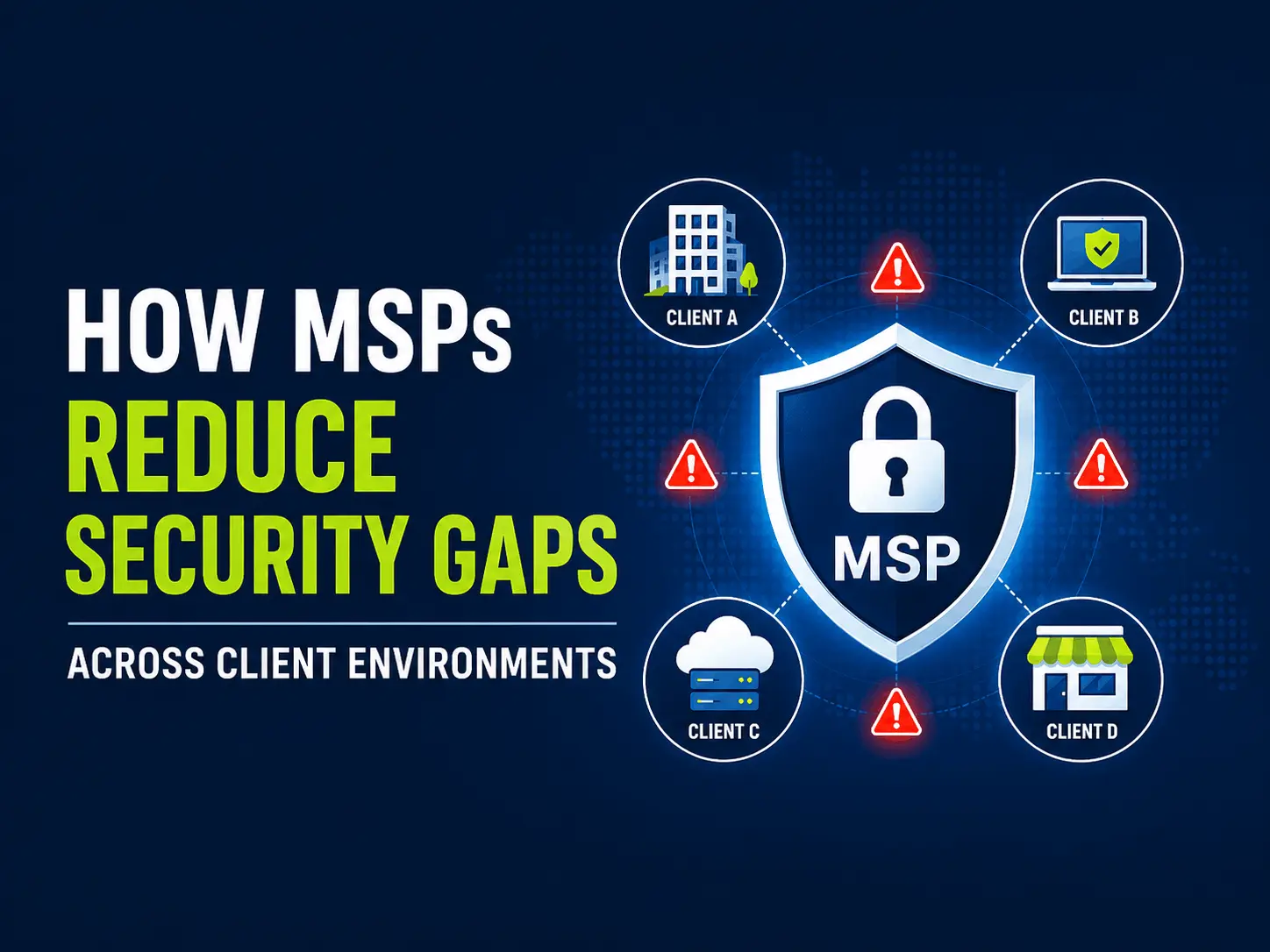
Managed service providers are under more pressure than ever to keep client environments secure, consistent, and resilient. As businesses adopt more cloud tools, remote access solutions, SaaS platforms, and connected devices, the attack surface continues to grow. For MSPs, the challenge is not just protecting one network. It is maintaining strong security across multiple client environments, each with its own users, systems, risks, and compliance needs.
Security gaps can appear when tools are disconnected, processes are inconsistent, or visibility is limited. The good news is that MSPs can reduce these risks by taking a more unified, proactive approach to cybersecurity.
Standardize Security Across Every Client
One of the biggest causes of security gaps is inconsistency. If each client has a different security setup, different policies, and different monitoring tools, it becomes much harder to manage risk effectively.
MSPs should build a standardized security baseline that can be applied across client environments. This may include endpoint protection, multi-factor authentication, patch management, access controls, DNS filtering, email security, and backup requirements. While each client may need some customization, having a clear foundation helps ensure that no essential protections are missed.
Standardization also makes onboarding smoother, improves reporting, and helps technicians respond faster when issues arise.
Improve Visibility Across Environments
You cannot secure what you cannot see. MSPs need clear visibility into client networks, endpoints, users, applications, and cloud environments. Without this, vulnerabilities can remain hidden until they are exploited.
Centralized monitoring and management tools allow MSPs to identify unusual activity, outdated systems, failed login attempts, risky configurations, and exposed assets. This broader view helps teams prioritize the most urgent threats instead of reacting only when something breaks.
Solutions designed for MSP cybersecurity can help providers bring security, networking, compliance, and visibility together in one place, making it easier to manage multiple clients without adding unnecessary complexity.
Strengthen Identity and Access Controls
Many security incidents begin with compromised credentials. That is why identity security should be a priority across every client environment.
MSPs can reduce risk by enforcing multi-factor authentication, limiting admin privileges, reviewing user permissions regularly, and removing access when employees leave a company. Conditional access policies can also help by restricting logins based on device health, location, or risk level.
The goal is simple: users should only have access to what they need, and nothing more.
Keep Patching and Updates Consistent
Unpatched software creates easy opportunities for attackers. MSPs should have a reliable patch management process for operating systems, applications, firmware, and security tools.
Automated patching can reduce manual work, but it should still include testing, scheduling, and verification. Regular reporting also helps clients understand what has been updated and where risks remain.
Educate Clients and Their Employees
Technology is only part of the solution. Human error still plays a major role in security incidents, especially through phishing emails, weak passwords, and unsafe file sharing.
MSPs can help clients close these gaps with regular security awareness training, phishing simulations, password guidance, and clear incident reporting procedures. When employees know what to look for, they become an important layer of defense.
Build a Proactive Security Strategy
Reducing security gaps is not a one-time task. It requires ongoing monitoring, regular assessments, strong documentation, and continuous improvement.
By standardizing protections, improving visibility, tightening access controls, and educating users, MSPs can deliver stronger security across every client environment. This not only reduces risk but also builds trust, improves efficiency, and positions the MSP as a strategic security partner.